


The Idea
MediDOC is wearable AI- technology through everyday clothing that not only stores up to date medical information but in the event of an emergency, it will call first responders who will have your medical information uploaded and vitals such as your blood pressure and heart rate can be taken, before arrival. It can be activated via voice and is capable of having its settings detect speed of movement including forms of physical trauma, walking, running and the act of falling.
Why use Artificial Intelligence in Wearable Technology?
- Age of AI is coming, whether it is our lifetime or within the next few generations
- Wearable AI will become more convenient and peripherals will disappear, be replaced by more “invisible” AI
- With AI, peripherals will be “invisible”, no need for chunky watches, phones
- All areas of life will be impacted, well-being and health will be enhanced by AI and technology
- “Middle man” will become less and eventually obsolete although necessary “Middle Man” who possess soft skills will still be necessary
- More instantaneous access to information that can be uploaded ahead of time and downloaded automatically, to decrease wait time that could be vital to someone’s life and our overall well-being
Rationale and What Started the Idea?
MediDOC was precipitated from my significant life experiences and changes that continue to be part human reality in the near and far future. The first experience is related to the aging Baby Boomer generation. Next, is my experience with children who had severe mental and physical disabilities and lastly, dealing with and preventing hate crimes from causing physical and emotional harm and even death.
Baby Boomers
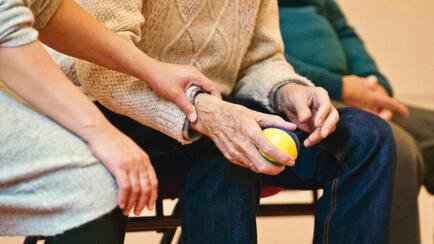
As the Baby Boomer generation retires and ages, being a child of these aging parents, I would like to have peace of mind that my parents are safe while they are still independent and able to run their daily tasks. However, they are not without risk and with my parents, they have experienced a fall here and there while they are out and about. I saw my Grandfather’s health degenerate quickly after he had a bad fall, from running to catch a bus. My Grandmother and Aunt, who had advanced Alzheimer’s would also experience episodes of falling and getting lost in the neighbourhood. My Grandmother’s very last fall resulted in her passing two weeks later. Providing 24/7 care is not readily possible in these situations due to funds, family life and the fatigue and mental burn out of family caregivers.
Special Needs
When I was in high school, I enrolled in a “Life Skills” course where I cared for the teenagers at our special needs facility. We had a small group of children with very high physiological needs due to their mental and physical disabilities. Over a period of two years, I had the responsibility to care for few of the children. Due to their conditions, a few of them were prone to “run away” and escape the school. One boy, who could not control his temper, would tear my earrings out of my ear, punch me in the stomach and then run away in his wheel chair - to be roaming around the halls and nearby school spaces. He would need a “time out” which we respectfully gave him. He was also prone to seizures due to Cerebral Palsy so it was always a risk for him to have temper tantrum episodes and run away. I had the privilege of tutoring and caring for him as well as three other particular students. One student had Sanfilippo Syndrome and passed away before I graduated. I took care of Alvin for two years: going on slow walks around the school halls and hand feeding him snacks of bananas and potato chips. I was also able to do some physiotherapy for him, under the guidance of the therapists there. Another student had advanced Autism. She would escape the facility and school, run away to the recycling centre three blocks away where we would always find her. We would walk there regularly so it was a place that was familiar and to which she knew the way. There was another student who had no speech capabilities but could express herself with noises and fast running. She always had to be monitored so she wouldn’t escape the facility. She would have no senses to watch for on-coming cars or traffic if she left the school premises. We had a safety booth for her to rest when one of us could not readily be right by her side. All of these children could have benefited from some sort of wearable technology that could track their movement, vitals signs but also, in the event that they had a potentially fatal fall or accident, a wearable technology that could instantly call for help automatically.
|
Stop Asian Hate and Discrimination

Meet “Asian Hate” and forms of racist-fuelled violence in the face - with all the violence against elderly (and young) women and men of Asian descent. If this type of wearable technology could detect forceful traumas and is voice activated, it would provide a good layer of protection in the case where a violent altercation occurs. Personally, I would feel better if my parents and elderly relatives had access to this type of technology.
Additional Important Mentions
- For good measure, I would like to reference Michio Kaku, the amazing physicist whose talk at UBC’s Connect (September, 2018) series inspired me to think of the technology of the future.
